Two national programmes presented today respond to ongoing strains on Cuba’s food supply and social protection systems, aiming to support nearly 2 million people in the country’s eastern provinces
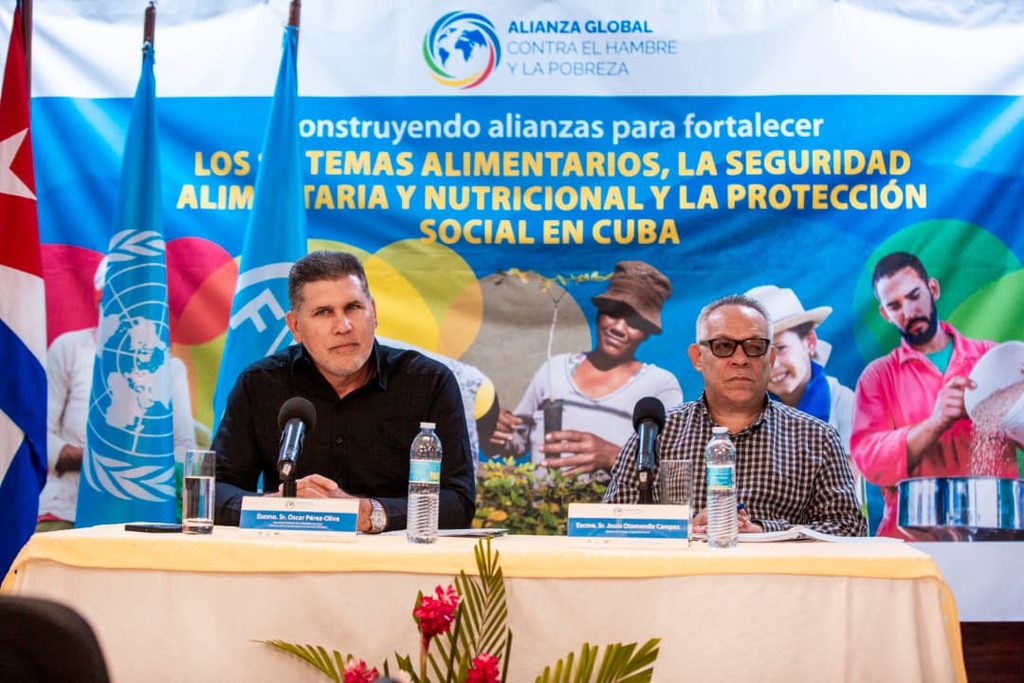
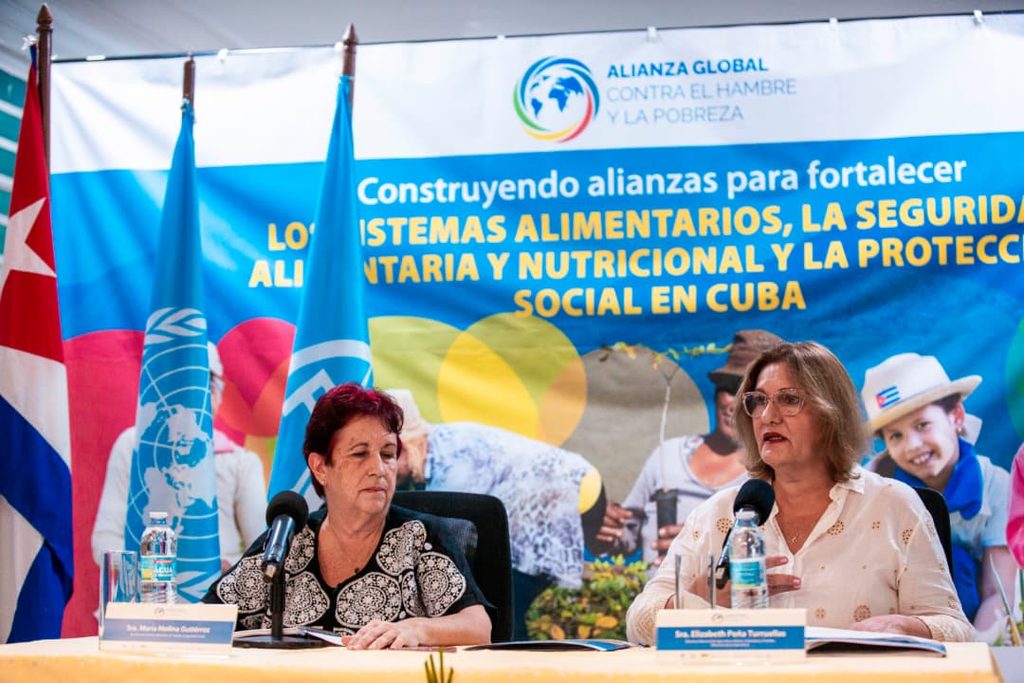
Minister of Labour and Social Security of Cuba address Alliance members in Havana. Photo: FAO
Havana, Cuba, 17 September 2026 – The Government of Cuba today presented two complementary plans to members of the Global Alliance against Hunger and Poverty, advancing further in its Country Programme Support process. Developed under the stewardship of the Ministry of Agriculture and the Ministry of Labour and Social Security, the plans are now open for international partners to submit non-binding Expressions of Interest.
“We are convinced that overcoming vulnerability to food insecurity is both a political priority and an ethical imperative for Cuba. Through these plans, we are advancing concrete and high-impact solutions for food security and social protection,” said H.E Óscar Pérez-Oliva Fraga, Cuba’s Deputy Prime Minister and Minister of Foreign Trade and Foreign Investment at a workshop today, hosted at the Food and Agriculture Organization of the United Nations (FAO) office in Havana.
“We trust that this session will mark the beginning of new partnerships capable of translating commitments into tangible results for the Cuban people and contributing to the achievement of the Sustainable Development Goals,” he added.
Sanctions, trade embargoes and other geopolitical circumstances have limited Cuba’s access to fuel, inputs and equipment, constraining domestic agricultural production. This has converged with a decline in food and agricultural imports, now estimated at USD 1.4 billion less per year than pre-COVID averages.
Energy shortages continue to affect the country’s cold chain and food processing capacity, while increasingly frequent extreme weather events, such as hurricanes and prolonged droughts, affect local production. Together, these factors have left 640,000 people in Cuba’s eastern provinces particularly vulnerable.
At the workshop, Cuba presented the plans designed to reinforce each other. The Targeted Social Protection for Food Security and Nutrition programme would modernize Cuba’s social registries and digital systems, and expand food and cash-based assistance for nearly 584,000 vulnerable people. Coordinated by the Ministry of Labour and Social Security of Cuba, the plan’s design has already benefited from technical inputs from the World Food Programme (WFP) Cuba.
The Sustainable and Resilient Local Food Systems for Social Protection and Food Security would increase local food production and connect it more directly to national social protection institutions, aiming to benefit over 1.3 million people. The programme received technical inputs from FAO in Cuba, operationalizes Cuba’s 2022 Law on Food Sovereignty and Food and Nutritional Security, and will be led by its Ministry of Agriculture.
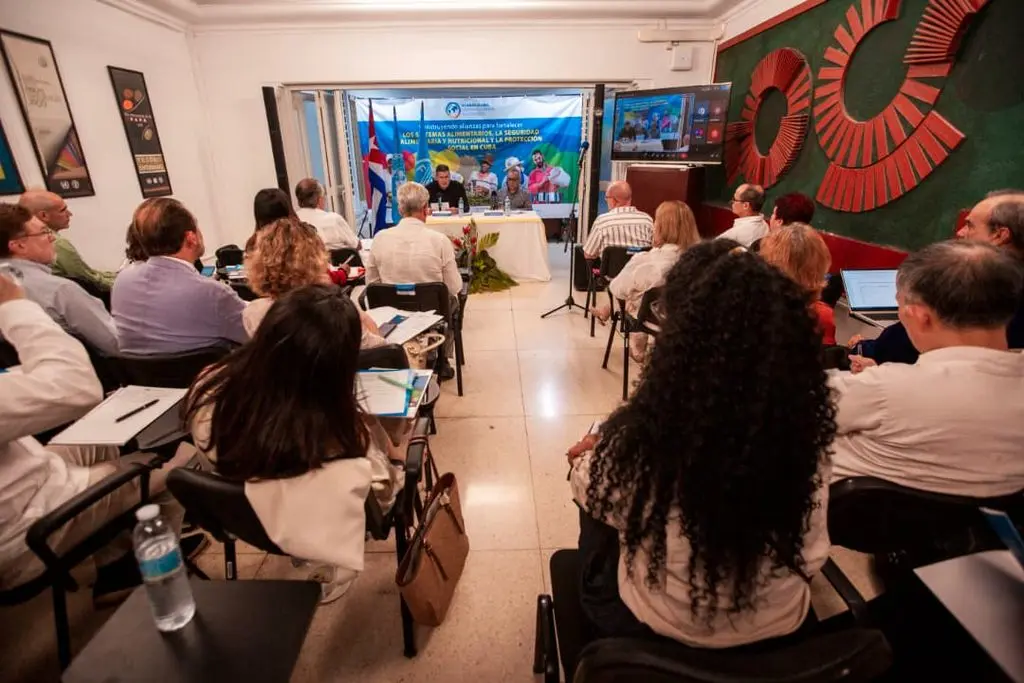
Both plans build on existing partnerships in support of Cuba’s social protection and local food production efforts in recent years, including with FAO, WFP, the United Nations Children’s Fund (UNICEF), and the United Nations Development Programme (UNDP), Chile, Spain, the European Union and the Green Climate Fund. Cuban officials emphasized that these collaborations have shown what works and are now calling on the broader Global Alliance membership to help scale up these efforts.
“These plans show how closely social protection and food security measures reinforce each other and showcase Cuba’s intention to advance its own integrated solutions at a larger scale,” said Renato Domith Godinho, Director of the Global Alliance Support Mechanism during the workshop. “The Global Alliance exists to support these kinds of efforts. I encourage all Alliance members to consider Cuba’s requests for technical assistance, financing and knowledge support,” he added.
The matchmaking stage now underway offers Alliance members a practical entry point to better align their own programming with Cuba’s national ambitions to end hunger and poverty.