The nation’s plan for resilient livestock production gains momentum this week as a high-level mission and technical workshop consolidate support from Alliance members
Addis Ababa, Ethiopia 03 July 2026 – This week, the Government of Ethiopia and a group of Global Alliance members advanced a multi-partner package for Yelemat Tirufat Plus, the country’s flagship programme to strengthen livestock production at a time of growing El Niño-related risks.
The five-day mission follows a series of commitments for financial, technical and knowledge support made by countries and organizations towards Yelemat Tirufat Plus through the Global Alliance Country Programme Support process.
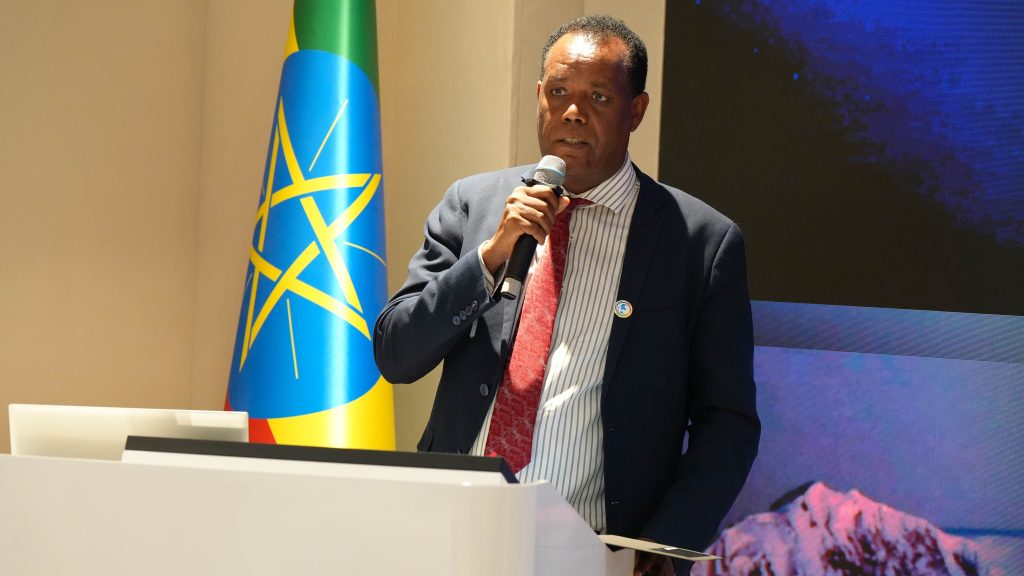
During a high-level engagement held on Monday, H.E. Dr. Efa Muleta Boru, State Minister at the Ministry of Agriculture and a member of the Global Alliance Board of Champions, emphasized that supporting the Yelemat Tirufat Plus programme represents a direct investment in smallholder farmers and an important step toward addressing food insecurity.
“Beyond expanding output, Yelemat Tirufat is fundamentally aimed at improving nutritional outcomes, strengthening resilience to economic and climate-related shocks and creating viable and sustainable livelihood opportunities,” said H.E. Dr. Fikru Regassa, State Minister for Livestock and Fishery Resources Development Sector at the Ministry of Agriculture of Ethiopia at a high-level meeting..
An initial support package from Alliance members was announced at the First Leaders’ Meeting of the Global Alliance in Doha late last year, including US$ 65 million in financing from the African Development Bank (AfDB), and technical assistance from Brazil, the Food and Agriculture Organization of the United Nations (FAO), Germany, Spain, the United Nations Industrial Development Organization (UNIDO), Village Enterprise, World Vision and the World Meteorological Organization (WMO).
A national plan built for today’s climate
Yelemat Tirufat Plus reflects Ethiopia’s long-term vision of transforming its livestock sector into a more productive, inclusive and resilient engine of growth. The programme builds on a successful Commodity Villages model, lauded for increasing production of milk, poultry, honey and fish in the country.
The plan comes as Ethiopia continues to face climate-related pressure on food systems, with the onset of a new El Niño cycle raising concerns over rainfall, pasture and water availability. During the 2015–2016 El Niño, FAO reported widespread livestock deaths, underscoring the need for a more climate-resilient livestock sector.
In its next phase, the programme aims to scale significantly, expanding to eight regions and 200 districts and reaching five million smallholder farmers. It also places a strong emphasis on inclusion, with targets to support women and young people, alongside efforts to improve access to finance and markets.
A partnership model built for alignment
Over the past year, Ethiopia has leveraged the Global Alliance process to convene prospective partners around a single priority programme. Alliance members are now working to align their cooperation portfolios behind that programme, helping reduce duplication and strengthen coordination. This week’s engagements in Addis Ababa mark a key step in this process.
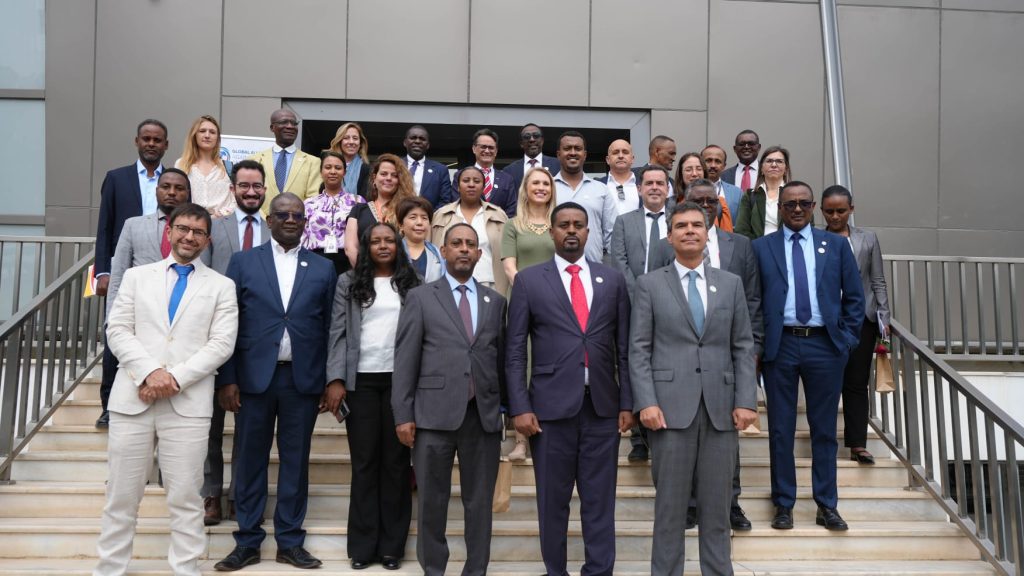
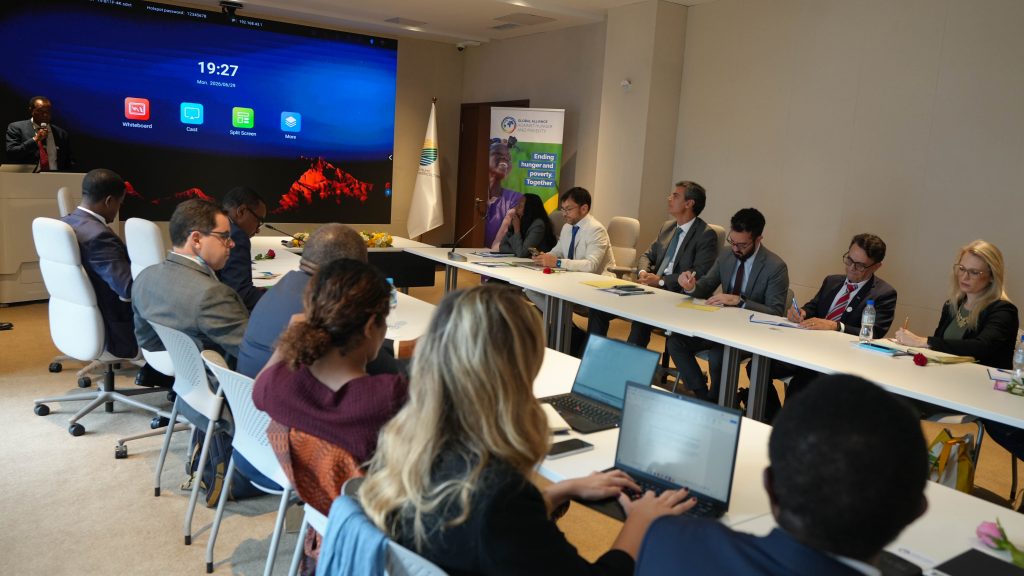
State Ministers from Ethiopia’s Ministry of Agriculture meet with representatives from 10 Alliance member institutions and countries during the mission. Photo: Meseret Workneh
At a technical workshop held yesterday, representatives of Ethiopia and other Alliance members defined how individual commitments fit together, identified remaining gaps, and agreed on an initial roadmap for implementation. Ethiopia is among the countries furthest advanced in the Alliance support process, moving from partnership commitments to practical coordination and delivery.
Building on these developments, the focus going forward is to ensure that the agreements made around the table this week translate into results in communities across Ethiopia.