A group of countries, multilateral development banks, and philanthropies unveil a roadmap to design and pilot an intended collaborative framework to better integrate and align financing for social protection
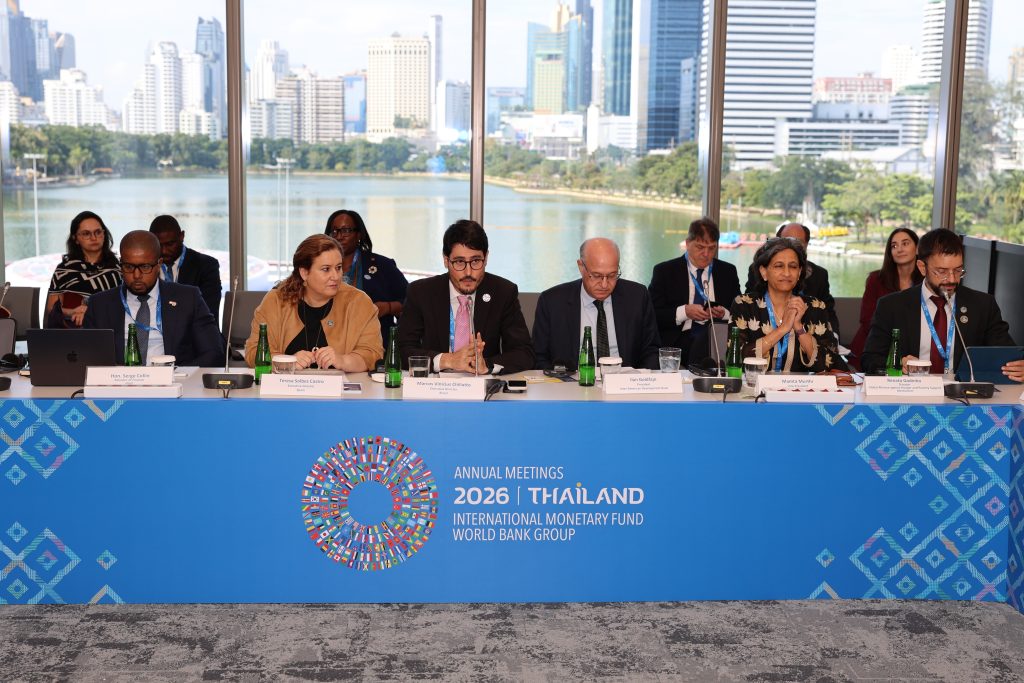
Bangkok, Thailand 12 October 2026 – A group of countries, multilateral development banks (MDBs), and philanthropies, all members of the Global Alliance against Hunger and Poverty, unveiled a roadmap to design and pilot an intended collaborative framework to better integrate and align financing for social protection. One of the framework’s key components is already operational and was launched today: a dedicated social protection area within the World Bank-hosted MDB Global Collaborative Co-Financing Platform.
The announcement was made during the World Bank Group–IMF Annual Meetings at an event hosted by Brazil and Spain.
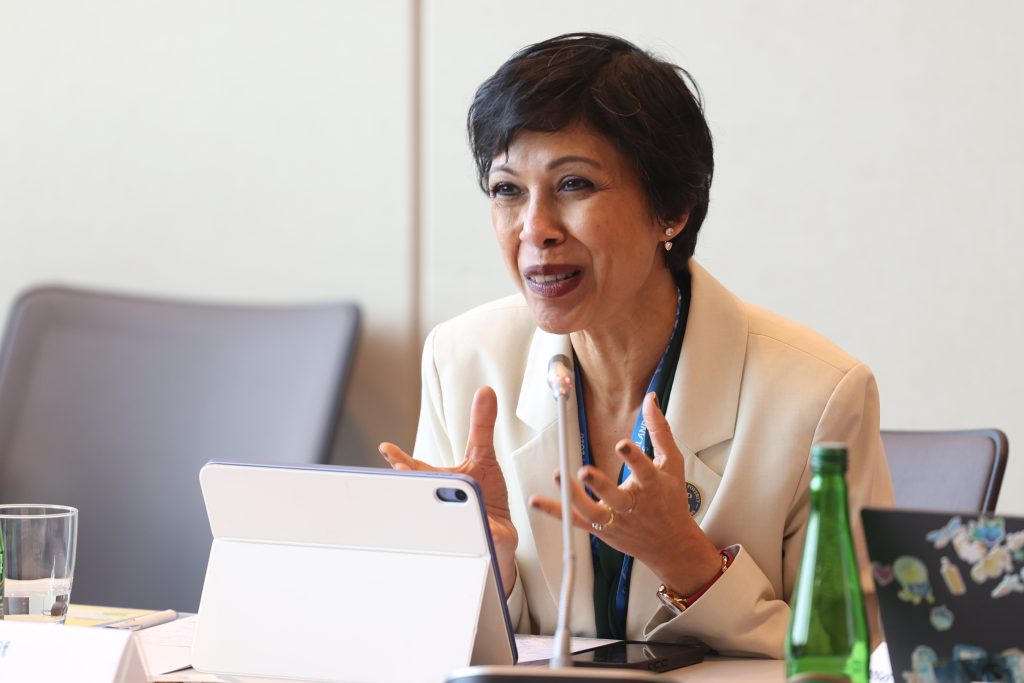
“This co-financing portal that we are launching today is so important. It’s one element of a new way of working together. […] We host it at the World Bank Group, but it involves all of us. […] It’s the first time that this co-financing portal will actually extend beyond the hard infrastructure sectors. […] Now we extend it to human infrastructure, human capital,” said Mamta Murthi, Vice President for People, World Bank Group.
Together, the social protection co-financing platform and the intended broader Collaborative Financing Framework (CFF) aim to help countries align different sources of financing behind national programmes that reduce poverty, improve food security and expand economic opportunities.
While the new social protection platform creates a dedicated tool to identify co-financing opportunities for more mature social protection projects and support larger investments, the broader CFF efforts will seek to loop in early catalytic grants that can help governments develop programmes, build implementation capacity and establish the evidence needed to secure longer-term financing. It will seek to link to the Integrated National Financing Framework (INFF) and could leverage support from the INFF facility.
“We strongly support the collaborative financial framework. […] Success depends not only on resources, but on coordination, alignment and execution. […] What we are launching today is the social protection tab within the framework, which is the very first tool towards that goal,” said Ilan Goldfajn, President of the Inter-American Development Bank.
Building on the commitments under the Sevilla Platform for Action (SPA) on integrated financing for SDG 1 and SDG 2 launched in FFD4 in Sevilla, Brazil, Spain, the United Kingdom, the Inter-American Development Bank (IDB), the International Fund for Agricultural Development (IFAD), the Livelihood Impact Fund, the United Nations Development Programme and the World Bank Group have stepped forward and volunteered to co-design the framework and pilot it with a few country partners.
“Spain remains fully committed to the Global Alliance. The development of the collaborative finance framework and the launch of the social protection portal represent important opportunities to strengthen cooperation between countries, multilateral development banks, bilateral partners, and other stakeholders. Our ambition should be clear: to move from fragmented financing to collective investment, from individual initiatives to coordinated action, and from commitments to measurable results for people,” said Teresa Solbes, Executive Director for Spain at the World Bank, who co-hosted the event.
The intended Collaborative Financing Framework will start small to test how grants and multilateral financing can be layered for catalytic effect, paired with domestic financing. This first phase will involve a limited number of willing partners and country programmes focused on social protection, economic inclusion and resilience, including school meals and responses to shocks.
Announcing that the Livelihood Impact Fund (LIF) is formally joining the Global Alliance, Heidi McAnnally-Linz, LIF’s Extreme Poverty Initiative Lead, described the framework as “a really exciting and a creative way to ensure that funders retain a sense of ownership over the kind of impact that they want, but also to connect them to things that are already happening.”
The framework will not create a new fund but instead leverage existing mechanisms, funds, and pipelines. Once locked in, it is intended that financing will pass directly through the different financing sources to the implementing countries or their implementing partners. As such, participation in developing and testing the CFF carries no funding pledge or requirement to set aside resources. Each participating institution retains its financing decisions and channels.
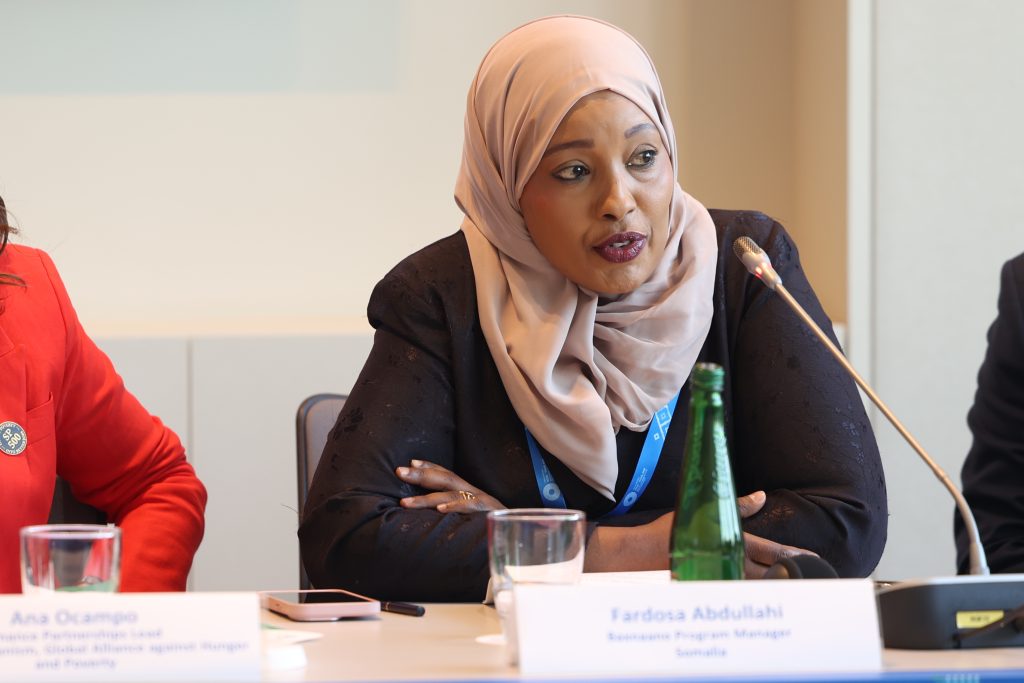
“Responding to needs remain[s] challenging due to short term and unpredictable financing and weak integration of climate finance into social protection programmes […]. Proposals such as this collaborative financing for hunger and poverty [are] not only important but necessary if we are serious in the journey to eradicate poverty and hunger,” said Fardosa Abdullahi, Baxnaano Programme Manager, Somalia.
Partners will work on practical arrangements to make financing priorities and requirements clearer, use country plans as a shared basis for considering support, and reduce duplication in preparation and reporting.
“The good ideas are there; initiatives have been taken by technical and financial partners, and also by the government. With more cohesion, we firmly believe the results will follow,” said Serge Collin, Minister of Economy and Finance of Haiti.
The framework is designed to remain flexible. Beyond the initial pilot, it could expand to other sectors and financing sources, it could also explore including debt swaps, if applicable, and blended finance. Possible applications include guarantees for microcredit and support for private investment that creates livelihoods for people living in poverty. These possibilities would be developed with interested partners in response to country priorities.
The proposed approach will go to the Alliance’s Board of Champions for guidance, with development and initial pilots envisaged in 2027. A planned Wilton Park dialogue in early 2027 will bring interested financing partners and officials from implementing countries together to work through key design questions.
What they said
Mathias Alencastro, Secretary for International Affairs, Ministry of Finance, Brazil
“At a time of constrained fiscal space and high debt burden, we must mobilize resources more effectively, reduce fragmentation, and scale up policies that deliver results. Brazil therefore welcomes the development of the collaborative financing framework and remains committed to working with partners to shape a practical, flexible mechanism that aligns financing with country-led priorities. We also see potential in innovative instruments, including debt-for-development swaps.”
Kathryn Mason, Senior Advisor to the UK Executive Directors at the World Bank and IMF
“We are really pleased to support the launch of the collaborative financing framework. […] We really welcome the way in which the CFF will address this need by helping to clarify financing priorities and requirements, use country plans to focus external support and reduce duplication in preparing and reporting financing operations. […] The UK is supporting the CFF in particular with technical assistance and by hosting a second event at Wilton Park in early 2027.”
Thomas Beloe, Director, Sustainable Finance Hub, Bureau for Policy and Programme Support, UNDP
“Supply-side coherence on financial flows is more important now than ever. We can’t afford inefficiencies. […] From the UNDP side, we commit to use our technical assistance that is supporting integrated national financing frameworks in ways that align and bring coherence behind the Global Alliance country plans and the collaborative financing framework.”
Iffath Sharif, Global Director for Social Policy, World Bank Group
“Pulling together this financing platform is, I think, half the story for us at the World Bank Group […] the rest […] is really about tracking and converting the financing into results. […] I hope that will be the next six months of our work together in terms of not just coordinating the financing, but channeling them into key results.”
Max von Bonsdorff, Chief Partnerships Officer, International Fund for Agricultural Development (IFAD)
“We’re a very committed partner of the […] Global Alliance [against] Hunger and Poverty, and very much welcome this initiative on the collaborative financing framework. […] [The] current constrained financing environment makes it more important to coordinate and collaborate for increased impact.”
Heidi McAnnally-Linz, Extreme Poverty Initiative Lead, Livelihood Impact Fund
“I’m pleased today to announce that LIF will be formally joining the Global Alliance Against Hunger and Poverty. […] This is a key reason why we support the idea of the co-creation of this Ready Set Go framework for co-financing. I think it’s a really exciting and a creative way to ensure that funders retain a sense of ownership over the kind of impact that they want, but also to connect them to things that are already happening.”
Renato D. Godinho, Director, Global Alliance Support Mechanism
“We don’t have the luxury anymore to waste ever scarcer resources, especially those valuable concessional resources, in fragmented projects that go nowhere. […] Everyone has their processes, rules, bureaucracies, budget cycles, and these are the things that are the enemies of actual working together. […] Join the pilot, starting small, give it a chance, see if it works.”
Marcos Chiliatto, Executive Director for Brazil, World Bank
“Coordinated efforts to eradicate hunger and poverty remain a very urgent necessity for the global economy. […] Hopefully we can agree on co-developing a flexible collaborative financing framework with a roadmap.”
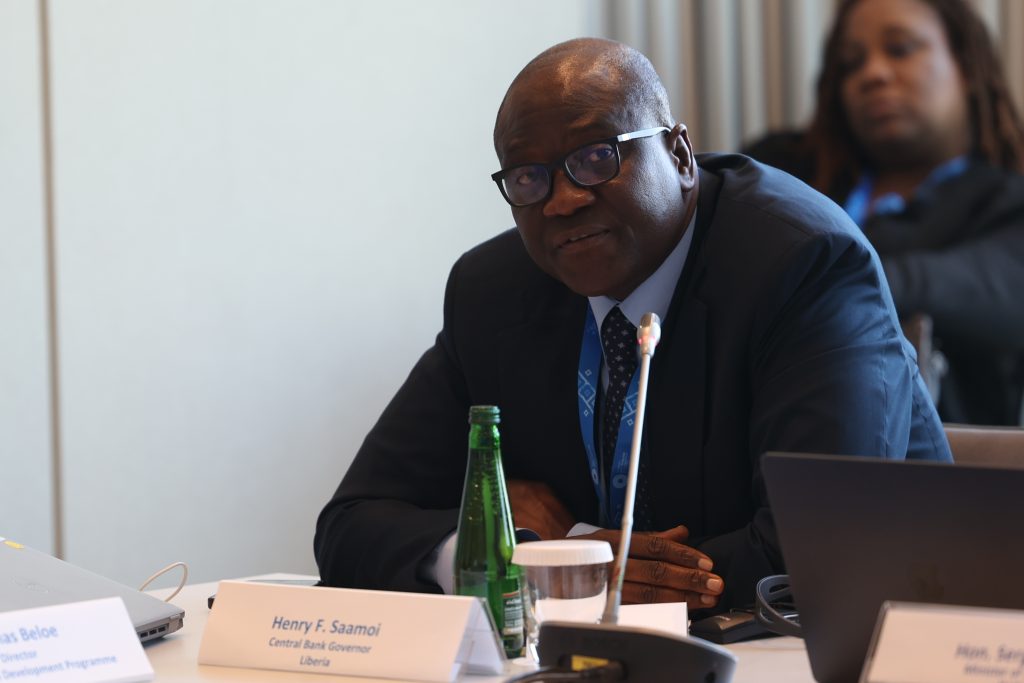
Henry F. Saamoi, Governor, Central Bank of Liberia
“The question is whether we can afford not to [invest in food security and poverty reduction]. And the answer to that is a resounding no. […] Liberia believes that collaborative financing offers the most practical pathway forward by combining public leadership, development partnership, private sector innovation, and community ownership.”
Serge Collin, Minister of Economy and Finance, Haiti
“We intend to rely on the Global Alliance against Hunger initiative so that additional resources are mobilized internationally, which shows that your approach matches ours. On one side, resources are being mobilized in the national budget so that we can fight hunger effectively. On the other, the support of technical and financial partners is being sought.”