

Seville, Spain—In the thick of the Fourth International Conference on Financing for Development (FfD4), a broad coalition of governments and development partners today lodged two flagship initiatives under the Seville Platform for Action (SPA), seeking to reset how money and know-how flow to the front lines of hunger, poverty and climate stress. Filed through the Global Alliance Against Hunger and Poverty, the twin pledges promise to wire pooled resources behind country-owned programmes rather than scattering them across small, disconnected projects.
The initiatives, “Building Better Integrated Finance for SDG 1 and 2” and the “Climate-Resilient Social Protection and Smallholder Agriculture Finance Partnership,” are designed to break down the silos that have long hampered international aid efforts. They will accelerate the implementation of large-scale national programs by streamlining financial flows from multiple donors and connecting them directly to on-the-ground needs.
At the heart of this new approach are the Global Alliance’s Fast-Track Implementation Plans, showcased by Ethiopia and Zambia at a high-level event preceding the announcement. These plans, a core innovation of the Global Alliance, provide a clear, country-owned roadmap for investment and action, moving beyond fragmented projects to holistic, national strategies aligned with an evidence-based policy basket of successful experiences. Programme implementation plans by Haiti, Kenya, Palestine and Tanzania have also been readied and showcased in Seville, with more to come in the Alliance’s Fast Track pipeline.
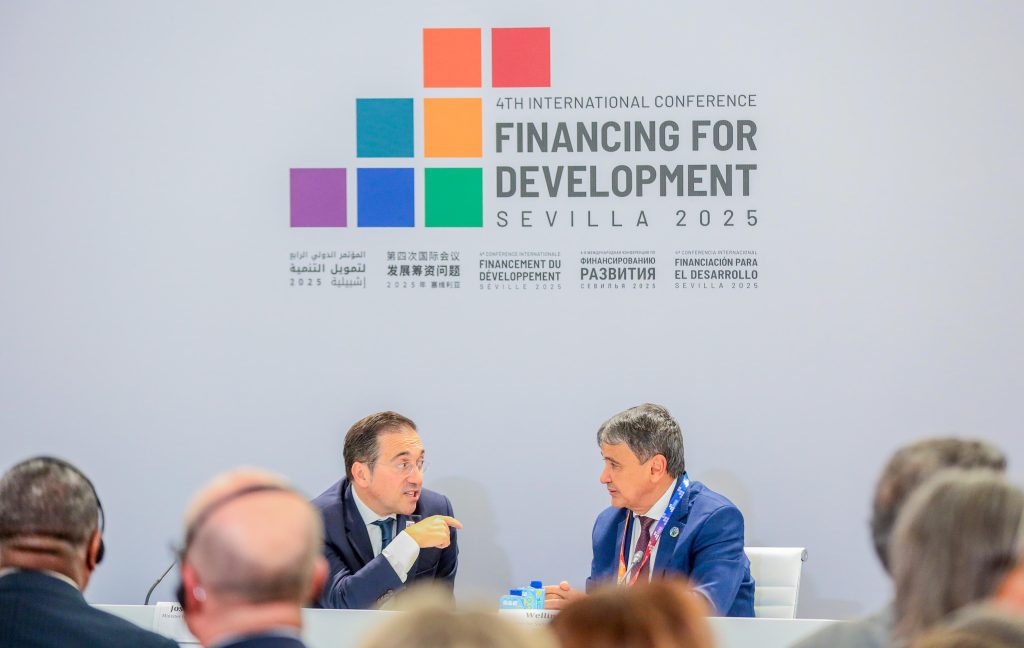
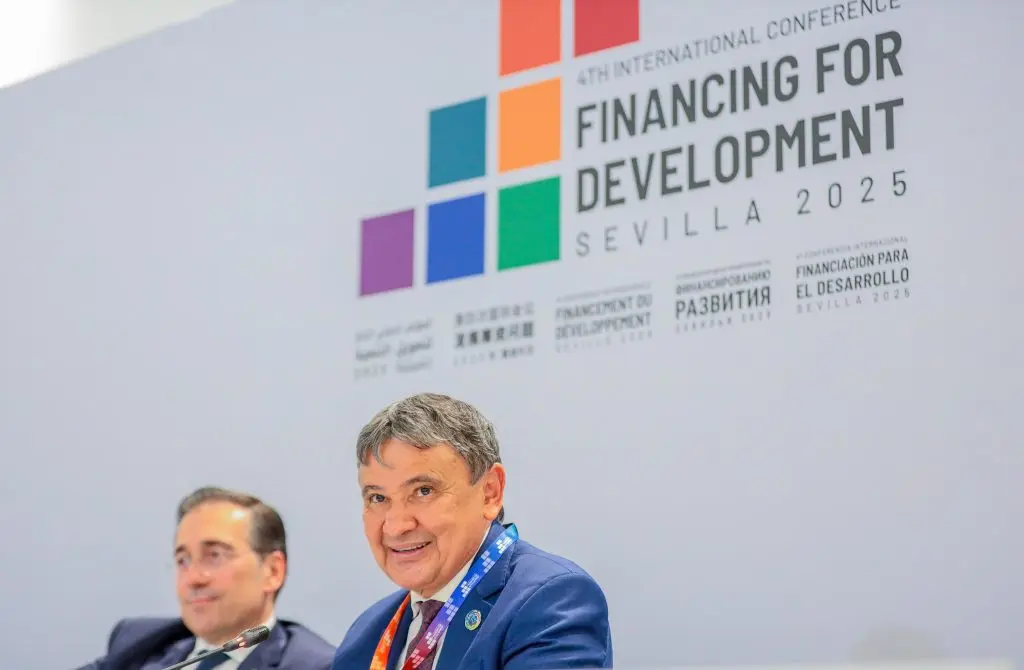
“For too long, the fight against hunger and poverty has been a story of good intentions undermined by a fragmented system,” said Wellington Dias, Minister of Social Development and Assistance, Family and Fight Against Hunger of Brazil. “With the recent major cuts in aid, change is now indispensable. The Global Alliance approach with its Fast-Track national plans, now supercharged by the Seville Platform for Action, aims to push for a new era of collaboration. We are putting countries in the driver’s seat, empowering them to build a future free from hunger and poverty.”
“For too long, the fight against hunger and poverty has been a story of good intentions undermined by a fragmented system. With the recent major cuts in aid, change is now indispensable. The Global Alliance approach with its Fast-Track national plans, now supercharged by the Seville Platform for Action, aims to push for a new era of collaboration”. Wellington Dias, Minister of Social Development and Assistance, Family and Fight Against Hunger of Brazil
Spain’s Foreign Minister José Manuel Albares echoed this sentiment: “The Seville Platform for Action is a framework for accountability. These initiatives move us from rhetoric to results with concrete, measurable, and time bound commitments. By uniting diverse partners and finance streams around country-led implementation, we are creating a powerful engine for change that will deliver tangible outcomes for people.”
The “Building Better Integrated Finance” initiative will not only support the implementation of the Alliance’s Fast-Track and other national programme implementation plans against hunger and poverty but also explore new mechanisms and models for improving integration and coordination of different development finance sources in support of social protection and other national programs for fighting hunger and poverty. The aim is to dramatically reduce approval times and transaction costs for both developing countries and donors, ensuring that more resources reach the people who need them most.
“The Seville Platform for Action is a framework for accountability. These initiatives move us from rhetoric to results with concrete, measurable, and time bound commitments. By uniting diverse partners and finance streams around country-led implementation, we are creating a powerful engine for change that will deliver tangible outcomes for people.” José Manuel Albares, Ministry of Foreign Affairs and Cooperation of Spain
A key partner in this effort, the UK’s Foreign, Commonwealth & Development Office (FCDO), has championed the need for more diverse and effective finance. Melinda Bohannon, Director General for Humanitarian and Development at the FCDO, said: “To end poverty and hunger, we must make development finance work harder and smarter, in support of partner country priorities and plans. Improving coordination between different traditional and innovative finance sources should help to ensure more resources reach the actions and people that need them most. We are proud to partner with the Global Alliance to explore innovative financing mechanisms to drive progress towards our shared goals.”
The second initiative, the “Climate-Resilient Social Protection and Smallholder Agriculture Finance Partnership,”addresses the critical intersection of climate change, poverty, and food security. By 2028, it will mobilize at least USD 500 million in additional climate finance to support the development of social protection systems that can help vulnerable communities withstand climate shocks, while also investing in climate-resilient agriculture and helping help at least twenty-five countries embed adaptive social protection or resilient smallholder schemes in their climate plans.
Momentum was visible the night before, when Ethiopia and Zambia unveiled their validated Fast-Track Implementation plans at the side-event “Banking on Change: Integrated Financing to End Hunger and Poverty.” Ethiopia’s Agriculture Minister Dr Girma Amentie told delegates the approach “gives us the confidence that our flagship program, Yelemat Tirufat (“the Bounty of the Basket”, can count on top notch knowledge exchange and financial partnerships”. President Akinwumi Adesina of the African Development Bank, also a Global Alliance member, was first to announce an initial US$ 25 million for that program, aimed at increasing productivity of small-scale livestock producers and connecting them to markets.
The SPA submissions dovetail with the joint commitment announced just yesterday by the Universal Social Protection 2030 partnership, a group of countries and international organizations, including Brazil, Spain, ILO and the World Bank, to expanding social protection coverage by two percentage points annually, focusing on populations and countries with the greatest gaps. “The Global Alliance’s focus on integrated financing and knowledge partnerships will be a key enabler of this goal”, says Minister Dias, “helping to unlock the resources needed for expanding social protection”.
The initiatives announced today are endorsed by a growing coalition of countries and organizations, reflecting a broad consensus on the need for a new paradigm in development cooperation.
Endorsing Countries and Organizations:
Building better and more integrated financing for SDGs 1 and 2
Ação da Cidadania, Brazil, Chile, Ethiopia, European Investment Bank (EIB), Fome de Tudo., Germany, Global Child Nutrition Foundation, Greece, IFAD, India, Instituto Comida do Amanhã, Instituto Fome Zero, International Chamber of Commerce, Kenya, Oxford Poverty and Human Development Initiative (OPHI), Portugal, Scaling Up Nutrition Movement (SUN), Somalia, Spain, Trickle Up, UNDP, UNIDO, United Kingdom/FCDO, Village Enterprise, World Vision International.
Climate-Resilient Social Protection and Smallholder Agriculture Finance Partnership
Brazil, Chile, Development Bank for Latin America and the Caribbean (CAF), Ethiopia, European Investment Bank (EIB), France, Global Child Nutrition Foundation, IFAD, India, Instituto Comida do Amanhã, Instituto Fome Zero, Inter-American Development Bank (IDB), International Chamber of Commerce, Kenya, Oxford Poverty and Human Development Initiative (OPHI), Organization of the Treaty on Amazon Cooperation (OTCA), Portugal, Somalia, Spain, Trickle Up, UN Food and Agriculture Organization (FAO); Scaling Up Nutrition Movement (SUN), UNDP, UNIDO, Village Enterprise, World Food Forum (WFF), World Vision International.
About the Global Alliance Against Hunger and Poverty:
https://globalallianceagainsthungerandpoverty.org
The Global Alliance was put forward by the G20 in November 2024 with the purpose of accelerating progress toward the Sustainable Development Goals (SDGs) of eradicating hunger and poverty, and is now owned by its 192 members, including 101 countries and 90 IFIs, IOs and other organizations. The Alliance’s approach focuses on supporting country owned programmes and evidence-based approaches through strengthened international cooperation and knowledge sharing to uplift the poorest and most vulnerable.
Media enquiries
Global Alliance Support Mechanism: Bruna Ribeiro ([email protected]),
Spanish Foreign Ministry: Enrique Martínez ([email protected])
Ministry of Social Development, Brazil: Neblina Orrico ([email protected]).