Recognized as the world’s largest multilateral fund, the Green Climate Fund is now part of the Global Alliance to finance climate action in social programs across developing countries

On Tuesday (July 15), the Green Climate Fund (GCF) officially joined the Global Alliance Against Hunger and Poverty. The cooperation aims to strengthen the GCF’s role in securing climate finance for programs that directly contribute to reducing hunger and poverty in the world.
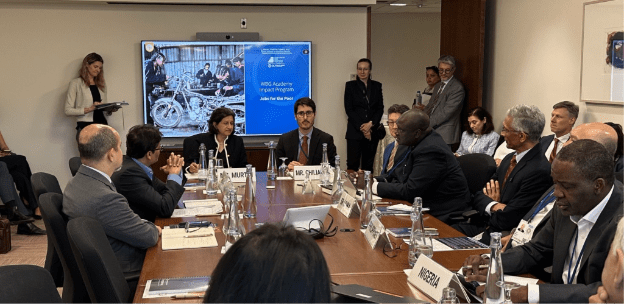
The Minister of Social Development, Family and Fight Against Hunger, and Co-Chair of the Global Alliance, Wellington Dias, met with the Executive Director of the GCF, Mafalda Duarte, to consolidate the Fund’s position as part of the Alliance’s financial and knowledge pillars.
As a member of the Alliance, GCF will be able to offer financial support to the implementation of climate-resilient agricultural practices, water access, adaptative social protection systems, work force transition away from high-emitting sectors and other solutions present at the Alliance’s Policy Basket.
The Fund will also be able to provide its technical expertise for streamlining policies against hunger and poverty into national climate strategies such as Nationally Determined Contributions (NDCs) and National Adaptation Plans (NAPs), as well as promoting knowledge exchange among its lending countries.
According to Wellington Dias, the GCF’s membership is essential to integrate social, environmental, and economic actions aligned with the pillars of the Alliance.
“The GCF is a great achievement for humanity. It represents a concrete step in our efforts to reach 2030 with reduced hunger and poverty, while contributing to a climate-balanced planet,” said Dias.
GCF Executive Director Mafalda Duarte also emphasized the importance of integrating economic, social, and environmental development agendas to ensure greater social stability. She advocated for the joint work of countries and institutions that make up the Alliance. “Together with Brazil, the Alliance’s member countries, and other entities, we will work to support knowledge sharing and exchange of experiences, as well as to boost investments,” Mafalda stated.
About the GCF
The Green Climate Fund is the world’s largest multilateral climate fund. Created in 2010 and headquartered in Songdo, South Korea, the GCF finances projects and programs aimed at reducing greenhouse gas emissions and promoting adaptation to the impacts of climate change, particularly among vulnerable populations.
The Fund already serves as a financial pillar of the Paris Agreement, mobilizing both public and private resources. It fosters collaboration among governments, international organizations, the private sector, and civil society to maximize the climate and social impact of investments. It also promotes technical capacity-building and institutional strengthening to help countries develop effective climate strategies.
The GCF’s membership in the Alliance reinforces the commitment to partnership and ongoing dialogue to strengthen the integration of global climate and social agendas.