Ethiopia, Haiti, Kenya and Zambia Unveil Concrete Implementation Plans with Coordinated Financing and Technical Support from Global Alliance against Hunger and Poverty Members
Benin, Indonesia, Palestine and several other countries are advancing commitments and plans on school meals, cash transfers, maternal and child and support and economic inclusion programs around the world.
DOHA, QATAR (November 3, 2025) – Demonstrating a new approach to international cooperation, several countries today announced concrete multi-partner implementation plans for large-scale national programs against hunger and poverty, with coordinated support from international financial institutions, bilateral donors, UN agencies, and philanthropies.
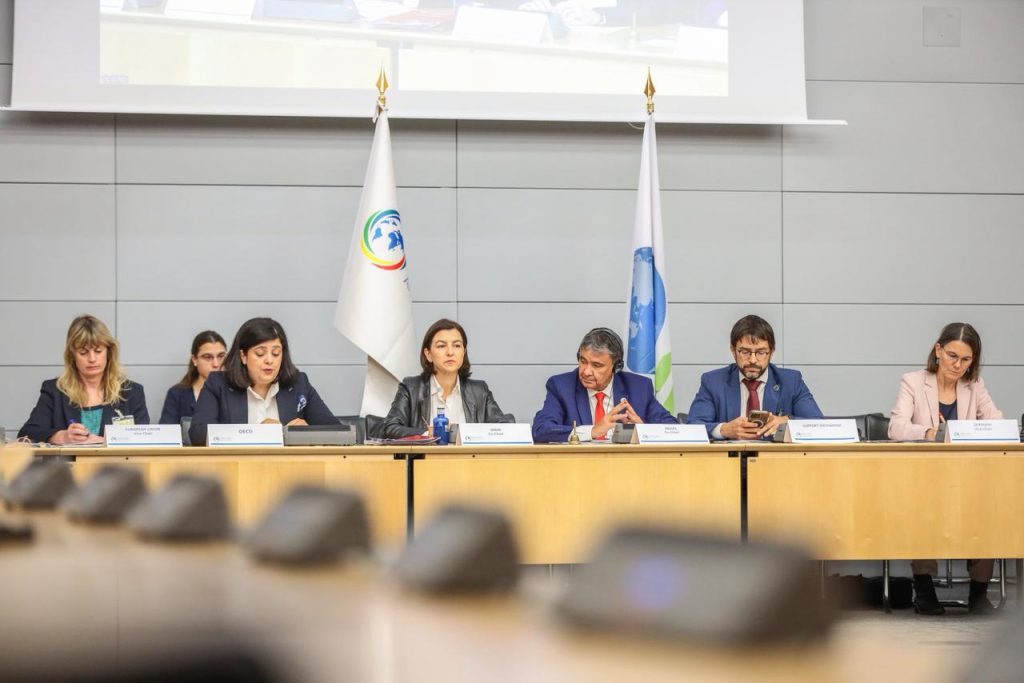
The announcements, made at the First Leaders’ Meeting of the Global Alliance against Hunger and Poverty in Doha, represent the culmination of the Alliance’s Fast-Track Initiative—a structured process that puts country-owned programs at the center and aligns multiple partners around national priorities.
With national development budgets under pressure, the Global Alliance against Hunger and Poverty offers a chance to allocate aid resources more effectively and equitably in the interests of the world’s poorest and most vulnerable people.
Hon. Doreen Sefuke Mwamba, Minister of Community Development and Social Services in Zambia, has highlighted that “By integrating livelihoods, nutrition, education, and climate resilience into our Social Cash Transfer programme, we aim at empowering vulnerable households to build lasting self-reliance. This partnership with the Global Alliance and our development partners reflects Zambia’s determination to achieve inclusive growth and social protection for all.”
“What makes these partnerships different is that countries are leading with their own plans, while partners coordinate their support rather than pursuing separate agendas,” said Renato Domith Godinho, Director of the Alliance Support Mechanism. “This is not about creating new programs. It’s about scaling up what works, with the right combination of financing, knowledge, and political commitment.”
Zambia: Scaling up the cash-plus approach
The Government of the Republic of Zambia, together with members of the Global Alliance against Hunger and Poverty, is launching a joint effort to scale up the ambition of Zambia’s CASH+ approach.
The initiative builds on Zambia’s flagship Social Cash Transfer (SCT) programme by integrating complementary services such as nutrition support, livelihood development, climate resilience, and access to education. The objective is to accelerate poverty reduction, combat hunger, and expand economic opportunities for vulnerable households across the country.
Zambia’s CASH+ Programme aims to reach 2 million low-income households by 2031, with an estimated cost of USD 1.5 billion, USD 1.2 billion of which are already funded. The Ministry of Community Development and Social Services (MCDSS), with financial support from the World Bank (as well as international funding by Germany, Ireland, Sweden, Switzerland and the United Kingdom), is currently implementing CASH+ models in multiple districts, covering approximately 173,000 girls and 145,000 women.
Several bilateral and multilateral partners are actively supporting this effort. Under the leadership of MCDSS and in coordination with multiple line ministries, the Government is mobilizing additional support from partners who have already confirmed their engagement, including:
- Financing partners: World Bank, African Development Bank, and the United Kingdom.
- Technical assistance and knowledge partners: BRAC International, Brazil, FAO, Indaba Agricultural Policy Research Institute, ILO, Innovations for Poverty Action, The Abdul Latif Jameel Poverty Action Lab, UNICEF, Village Enterprise, WFP, World Meteorological Organization (WMO), and World Vision.
This coordinated effort reflects Zambia’s commitment to advancing an integrated approach to social protection that strengthens resilience, promotes inclusive growth, and ensures no one is left behind.
Ethiopia: Advancing The Yelemat Tirufat Flagship Programme
Ethiopia and a group of members of the Global Alliance against Hunger and Poverty are joining forces to advance the Yelemat Tirufat Flagship Programme. This structure will steer rollout, confirm operational allocations, and track results as the partnership moves from commitment to delivery—ensuring that by 2030, Ethiopia achieves a 150-300% increase in livestock outputs, a 40% rise in farmer incomes, and a 60% reduction in post-harvest losses.
Under Ethiopia’s leadership, the African Development Bank is preparing a USD 65 million grant package to strengthen the poultry value chain, while World Vision Ethiopia will collaborate by leveraging its USD 5 million in priority districts under the Yelemat Tirufat to provide technical support, community mobilization, and knowledge management, and use its national and global reach in joint resource mobilization.
Spain is expanding technical cooperation in fish farming and poultry through a new €500,000 line, while the United Kingdom and FAO are providing technical expertise in value chains, rural finance, and resilience. In addition, FAO will contribute to the Yelemat Tirufat an estimated financial leverage of 7.5 million USD through animal health capacity building for prevention, preparedness, and diagnosis of zoonotic diseases and antimicrobial resistance (AMR) threats; and supporting poultry and pastoral value chains development.
UNIDO is supporting the Yelemat Tirufat Flagship programme with its ongoing agro-industrialization project portfolio and is also expanding its technical cooperation in dairy and poultry with upcoming projects for at least USD 2.4 million. Brazil is planning to train 480 rural extension officers to support the programme and Germany aims to support the programme by offering capacity development measures as part of its extensive ongoing agricultural portfolio in the country. Village Enterprise and WMO have indicated readiness to share policy experience, technical know-how and/or investment promotion for different areas of the program.
Together, these contributions will be coordinated by Ethiopia’s Ministry of Agriculture, with the support of the Global Alliance Support Mechanism, working with regional and local authorities, and Alliance partners.
Kenya: Maji Plus – Water To Thrive
The Government of Kenya and a group of Global Alliance against Hunger and Poverty Members announced a joint push to implement the landmark “Maji Plus: Water to Thrive” program—delivering affordable water access for 1400 schools and communities in arid and semi-arid counties to simultaneously boost climate resilience, nutrition, and learning; promote women’s empowerment and wellbeing; and create jobs and livelihood opportunities for children, farmers and communities.
Under Kenya’s leadership, the African Development Bank is working with the government with a view to securing up to USD 77 million in new and realigned existing financial resources, and establish modalities of financing to support the implementation of the national plan. Further, AfDB is developing a proposal to bring to the Green Climate Fund (GCF) under the Fund’s simplified approval process. In its turn, the World Bank will explore synergies with its ongoing support to the Government through the Second Kenya Social and Economic Inclusion Project.
Brazil, through its Ministry of Social Development and the Brazilian Cooperation Agency, the WFP Centre of Excellence, and the Articulation for the Semi-Arid non-governmental organization (ASA) will deploy an integrated knowledge and implementation package to take proven social technologies from pilots to nationwide delivery, supported by an initial grant from the Rockefeller Foundation. The Government of India will provide technical expertise and capacity building related to community-level water management in line with the program’s demands.
For next steps, a Program Implementation Group—chaired by Kenya, including NDMA, the Ministry of Foreign Affairs, the National Treasury, the Ministry of Labour and Social Protection and all aforementioned Alliance partners—will steer a phased rollout and track results as the partnership moves from commitment to delivery.
Haiti: Strengthening Social Protection And Cash Transfers
The Government of the Republic of Haiti and members of the Global Alliance against Hunger and Poverty announce a joint plan to strengthen and expand social protection efforts over the next five years, including cash transfers under the National Social Protection and Promotion Policy (PNPPS). The plan aims to strengthen the economic resilience of communities and ensure regular and adequate access to food for the most vulnerable households in Haiti.
Developed by the Haitian government, the preliminary plan focuses on expanding cash transfers, reintegrating and training young people, and strengthening targeting and payment systems to ensure effective programme implementation in line with the fourth pillar of the PNPPS.
Under the coordination of the Ministry of Social Affairs and Labour (MAST) and with technical and operational support from the Economic and Social Assistance Fund (FAES), several partners have already expressed their financial support for this initiative. This includes financial support from Haiti’s key partners, notably the Inter-American Development Bank, the Federative Republic of Brazil, as well as the World Bank, in addition to their technical and knowledge support.
Other partners such as FAO, the Government of India, ILO, Pan American Health Organisation (PAHO/WHO), UNICEF, WFP and World Vision Haiti have also expressed their willingness to support the implementation of the plan with their sectoral expertise.
This concerted effort illustrates the commitment of Haiti and its international partners to providing sustainable protection for vulnerable groups and accelerating the fight against hunger and poverty throughout the country.
The Drive To Implement High-Quality School Meals For Another 150 Million School Children
The Global Alliance against Hunger and Poverty is working closely with other government-led efforts, the School Meals Coalition and the Latin American and the Caribbean’s Sustainable School Feeding Network (RAES), to drive the adoption of national, high-quality and nutritional school meals. Through the Sprints 2030 Initiative, Global Alliance members have pledged to support initiatives aimed at extending nutritious school meals to another 150 million children in low-income and lower middle-income countries by 2030 – doubling the number currently reached by school feeding programs.
In turn, at its Second Global Summit in Brazil last month, the Coalition celebrated 40 new national commitments to school meals programs made over the past two years, bringing the total to more than 65. The focus now shifts to turning these commitments into tangible action. To support this effort, a group of Coalition members and partners is preparing to launch a new initiative under the Coalition – the School Meals Accelerator. This initiative will help committed governments implement their pledges, including those made through the Global Alliance, and will work in close collaboration with the Alliance’s Support Mechanism.
Over the past year, the Alliance has actively supported transformative school feeding plans. At the request of the Government of Indonesia, the Coalition and Alliance partners have supported Indonesia’s flagship Nutritious Meals Program – an ambitious initiative launched by President Prabowo Subianto to reach 60 million children with free, nutritious school meals.
Benin has also joined the Alliance’s Fast Track initiative to build on its extraordinary progress with the National Integrated School Feeding Program, which now reaches three-quarters of children in public schools. As it seeks to go the last mile and achieve universal access, the government of Benin has requested technical support from Global Alliance members to help with logistics, procurement, staff training, and the development of procurement systems that link schools to smallholder farmers. The government plans to purchase at least 75% of food locally. Cambodia and several other countries already advanced their intention to engage with the Global Alliance and submit plans for expanding school meals.
Other Countries Advancing Through The Fast-Track Process
Beyond the countries announcing partnerships today, several others are progressing through the Alliance’s Fast-Track Initiative receiving expressions of interest from Alliance members.
Seeking to emerge from an unprecedented humanitarian crisis as a result of the large-scale aggression and its devastating social and economic impacts, especially in Gaza, the State of Palestine has developed two plans under the Alliance. The first is focused on resuming and unconditional monthly cash transfers to safeguard the most vulnerable groups while efforts continue to gradually restore the government’s full social protection services in Gaza. Another programme, known as Rifq (“Kindness”), aims to provide social assistance services to pregnant and lactating mothers and to children, especially orphans of the war.
Rwanda has validated a plan focused on scaling up its Vision Umurenge Programme with a nationwide economic graduation programme aiming to lift 996,000 households out of poverty by addressing economic and social vulnerabilities while enhancing resilience to shocks.
Tanzania has developed a plan for its Integrated Maternal Health and Early Childhood Development Programme, targeting 6.5 million children and 6.5 million caregivers with integrated health and education services.
Cambodia, Cuba, the Dominican Republic, Indonesia, and Mozambique are also advancing pre-plan development for large-scale programs spanning social protection, economic inclusion, school feeding, smallholder agriculture, and nutrition. Additional countries are preparing to enter the Fast-Track process in upcoming waves. Somalia and Lebanon are among countries that have announced their intention to develop national program implementation plans with Alliance support.
Palestine´s Minister of Social Development and Acting Minister of State for Relief Affairs, H.E. Dr. Samah Hamad, affirmed that “through our two programs, for which we seek support from the Alliance members, we are committed to ensuring that these vulnerable groups receive the essential health and social services they require — without interruption, delay, or compromise. The protection of these lives and their dignity is an absolute priority to regain the Palestinian social fabric across my country.”
How The Fast-Track Process Works
The Fast-Track Initiative follows a structured four-phase approach:
Phase 1: Country Selection/Request – Countries were identified based on their 2030 Sprint commitments and readiness to develop large-scale national programs. Starting now, after the Leaders’ Meeting, this Phase will change to a fully demand-driven process, where any Alliance member country can request support.
Phase 2: Pre-Plan Development – Selected countries work with the Alliance Support Mechanism to develop high-level implementation pre-plans outlining program goals, current status, existing resources, expected results, and partnership needs.
Phase 3: Matchmaking – Validated pre-plans are shared with all Alliance members, who submit Expressions of Interest indicating their willingness to provide financing, technical support, or both.
Phase 4: Country Roundtables – Countries receiving a critical mass of partnership offers convene national roundtables to develop operational plans and formalize commitments.
To date, 14 pre-plans have been developed by 12 countries, 9 have been officially validated, and 85+ Expressions of Interest have been received from international financial institutions, bilateral donors, UN agencies, and philanthropies.
What Makes This Different
The Global Alliance is piloting an innovative approach for how countries, external funders and knowledge partners engage, ensuring donor-driven projects are replaced with country-led partnerships
Country ownership: Governments lead with their own plans and priorities, instead of time-limited, donor-driven interventions and projects separate from government systems and programs
Coordinated support: Multiple partners align their financing and technical assistance around national programs, rather than pursuing separate agendas.
Proven interventions: Programs are based on evidence-based programs and policy instruments from the Alliance Policy Basket—interventions that have been tested and shown to work at scale.
Integrated approaches: Rather than siloed interventions, programs can combine social protection, agriculture, nutrition, water, and climate resilience in ways that address root causes of poverty and hunger.
Speed and efficiency: The structured Fast-Track process moved from country selection to the first partnership announcements in just a few months — far faster than traditional project cycles.
PRESS CONFERENCE, EVENT LIVESTREAMING AND PHOTOS:
Live Streaming of the Event through UNWebTV
A press conference will be held following the event at 5:30 PM (Doha time) at the Qatar National Convention Centre, Press Briefing Room (Auditorium 1, Ground Floor) for media accredited for the Second World Summit on Social Development. Live Streaming link for the Press conference
Official photos from the First Leaders’ Meeting of the Global Alliance against Hunger and Poverty will be available
ABOUT THE GLOBAL ALLIANCE AGAINST HUNGER AND POVERTY
Launched at the G20 Summit in Brazil on November 18, 2024, the Global Alliance against Hunger and Poverty has grown from 148 founding members to over 200 members in one year, including more than 100 countries, the African Union, European Union, 24 international organizations, 9 international financial institutions, and over 30 philanthropic and non-governmental organizations. The Alliance aims to accelerate progress toward SDGs 1 and 2 through providing coordinated support from its members towards national, large-scale evidence-based policies and programs.
A key goal driving the Fast-Track Initiative and the country-level work of the Alliance is the implementation of the six “2030 Sprints” — bold, collective efforts to scale up proven policies and programs from the Alliance Policy Basket.
The Alliance is governed by a Board of Champions comprising senior representatives of up to 50 member countries and organizations, and supported by a Support Mechanism led by Director Renato Domith Godinho, with teams and liaison officers based in Brazil, Ethiopia, Italy, the United States, and Thailand.
PRESS CONTACT
Alliance Communications
[email protected]