Leading universities take up new shared seat on the Alliance Board of Champions to strengthen evidence-based policy design and delivery in countries facing hunger and poverty
Rome, Italy, 05 May 2026 – Today, the University of Brasília, the University of Buenos Aires and the University of Oxford joined the Board of Champions of the Global Alliance, taking up a newly created shared seat representing academia. In parallel, the University of the Free State was confirmed as a member of the coalition.
Together, these developments mark a shift in momentum around the Global Alliance’s Knowledge Pillar and strengthen the link between research, policy and practice while elevating the role of institutions from the Global South in shaping solutions to hunger and poverty.
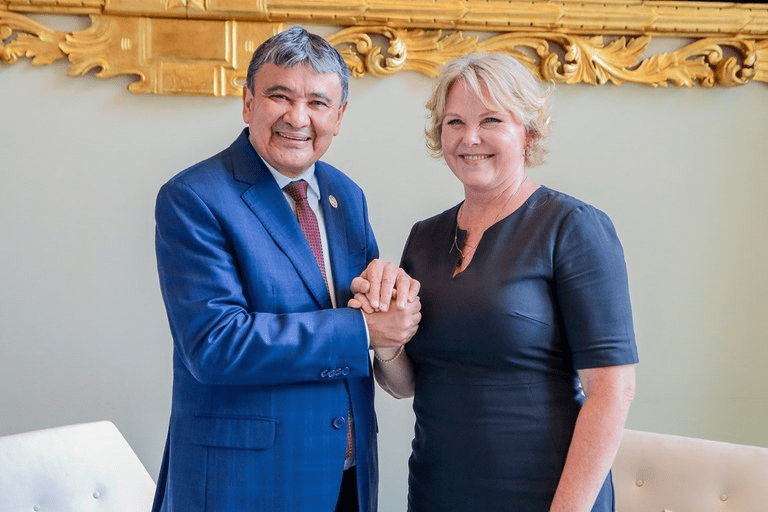
“We are very honoured to join scholars, researchers, and students around the world who focus their research and intellectual energy on hunger and poverty in a rigorous and practical manner, and co-create solutions that are shaped by and useful to many actors, including first and foremost, the protagonists,” said Sabina Alkire, Professor and Director of the Oxford Poverty and Human Development Initiative (OPHI) at the University of Oxford, who will serve as Champion for the shared seat. She also added, “We want to work not only with academia but also with everyone who walks with us in this Alliance.”
Professor Alkire will be supported by alternates, Mário Ávila, Associate Professor at the University of Brasilia and Pablo Rush, Secretary of Extension at the University of Buenos Aires.
The shared seat for academia emerged from a joint proposal by 11 member institutions, including the Consultative Group on International Agricultural Research (CGIAR), the Federal University of Goiás (UFG), the Federal University of Rio Grande do Sul (UFRGS), the Federal University of Santa Catarina (UFSC), the University of São Paulo (USP), Getúlio Vargas Foundation (FGV) and the Massachusetts Institute of Technology, as well as the three universities now occupying the shared seat.
The proposal aims to formalize the participation of universities and research centres in the Alliance’s governance structure and to mobilize new Policy Instruments and Country Examples for the Global Alliance Policy Basket – a repository of tested solutions tackling hunger and poverty.
The addition of the University of the Free State as an Alliance member today further highlights its commitment to integrating diverse regional perspectives into its collective evidence base.
By deepening its engagement with academia, the Global Alliance is positioning research institutions not only as contributors of knowledge, but as active partners in shaping, adapting and scaling evidence-based solutions, grounded in diverse perspectives and national contexts.