Proven water solutions cross the ocean as Brazil and Kenya kick off South-South exchange to advance ambitious water access programme
Nairobi/Brasilia, 27 July 2026 – Brazil has officially launched its technical support to strengthen climate resilience and food security in Kenya, delivering on a commitment made under the Global Alliance Country Programme Support process.
A virtual session held on 15 July 2026 marked the first step of a broader capacity-building package pledged by Brazil, which also includes support for programme design, consultation with local stakeholders, and Monitoring and Evaluation.
The session brought together representatives from Brazil’s Ministry of Social Development and Fight Against Hunger (MDS), Kenya’s National Drought Management Authority (NDMA), the WFP Centre of Excellence against Hunger and civil society partners. Together, they explored how Brazil’s long-running Cisterns Programme can inform Kenya’s efforts to expand access to water in drought-prone areas, particularly for schools and surrounding communities.
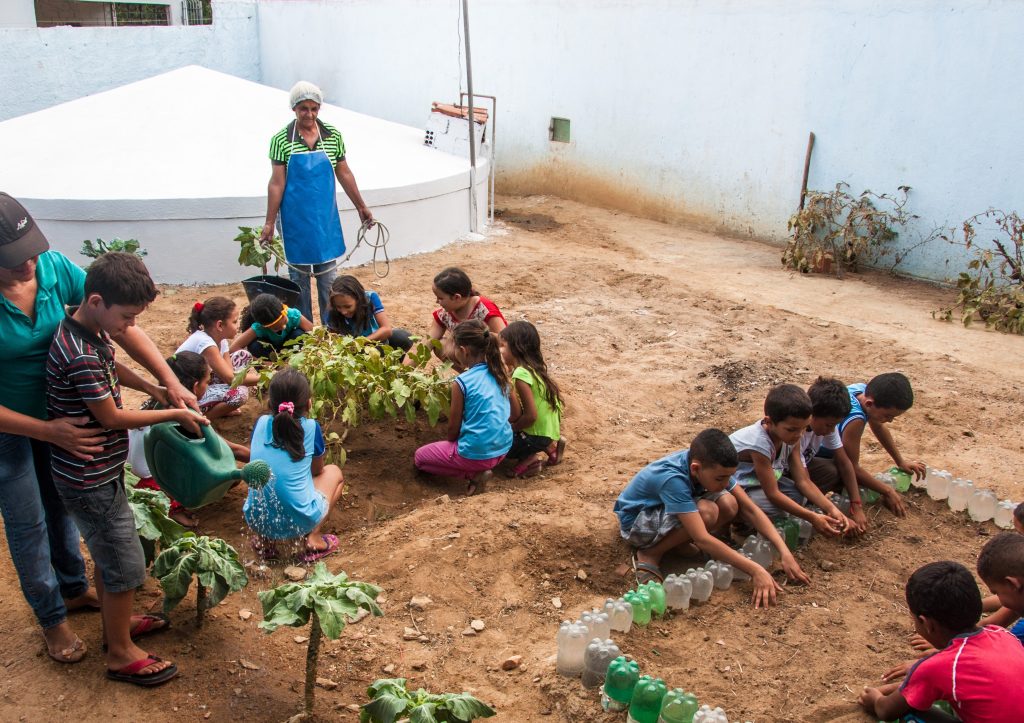
Presented by Vitor Leal Santana, Director of the Department for the Promotion of Rural Productive Inclusion and Access to Water at MDS, the Cisterns Programme demonstrates how low-cost rainwater harvesting technologies, combined with community participation and institutional support, have expanded water access for more than 1.3 million rural families and approximately 8,000 schools across Brazil.
Beyond providing safe water, the programme has strengthened food security, rural livelihoods, climate resilience and social inclusion, while adapting technologies to different territorial realities, including in the Brazilian Amazon.
Improving water security for 420,000 Kenyans
Kenya’s Maji Plus programme aims to deliver safe water and improve climate resilience through rainwater harvesting systems for schools and communities in the country’s arid and semi-arid regions. At the session, Felix Adoyo of NMDA described how the programme can benefit approximately 420,000 people facing frequent droughts. He also highlighted the need for coordinated technical and financial support from Alliance members and partners as implementation moves forward.
Participants exchanged views on financing models, legal frameworks, partnerships with civil society organizations and the durability of rainwater harvesting systems. Speakers at the event emphasized that successful adaptation of Brazil’s approach depends not only on technology but also on governance, community ownership, long-term institutional commitment and a decentralized implementation model across federal, state, municipal and community levels.
Next stop: Field mission to Brazil
Building on the virtual exchange, Kenyan counterparts will soon travel to Brazil for a technical exchange mission, expected to deliver hands-on experience in the design, construction, management, and maintenance of Brazil’s water management technologies and community engagement approach.
The upcoming mission and ongoing collaboration reinforce South-South cooperation as a powerful driver of sustainable development, and the wider role of the Global Alliance in connecting country demand with member expertise and resources.
Photos: MDS Brazil and Arne Hoel / World Bank