During a G20 Social meeting, civil society leaders contributed to the creation of the G20 Global Alliance against Hunger and Poverty’s terms. In an unprecedented way, the Brazilian presidency has leveraged the group towards discussing the policies to be presented to the forum harboring the world’s largest economies.
Brasil’s Minister of Development and Social Assistance, Family and the Fight Against Hunger (Ministério do Desenvolvimento e Assistência Social, Família e Combate à Fome/MDS), Wellington Dias, opened a G20 Social meeting in Teresina (state of Piauí) this Monday (20) by highlighting the G20’s commitment to listening to civil society in the fight against hunger and poverty. The minister held a press conference alongside minister Márcio Macêdo from Brasil’s General Secretariat of the Presidency (Secretaria-Geral da Presidência), and the governor of the state of Piauí, Rafael Fonteles.
According to Dias, it is critical to listen to social leaders and workers involved in projects like the solidarity kitchen because practical day-to-day experience adds value to a report that will be presented with proposals that G20 member countries can adapt and use. The document will also be used as a reference for the Global Alliance Against Hunger and Poverty.
“We want to leave Teresina with technical understanding, and to have established the terms of the Global Alliance against Hunger and Poverty so that we can take the world off the hunger map,” stated the minister.
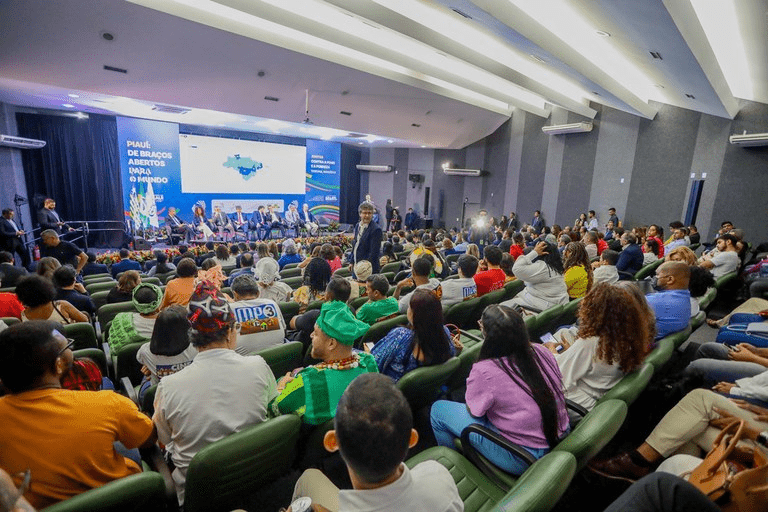
Unprecedented participation
Minister Márcio Macêdo observed that it was President Luiz Inácio Lula da Silva who took the initiative to expand social participation in the G20. In an unprecedented way, the Brazilian G20 presidency has included civil society in the discussion of policies to be presented at the forum of the world’s largest economies—to take place in November, in Rio de Janeiro.
“Minister Wellington and I have established a very significant partnership so that this set of projects against hunger may be carried out with the participation of the people of Brasil and of the other countries that make up the G20,” said Macêdo.
Rafael Fonteles believes that, by placing social issues on an equal footing with geopolitical and economic ones, President Lula is “demonstrating the unequivocal commitment of his team of ministers to improving people’s quality of life”.
The G20 Social program precedes the 3rd meeting of the Task Force to develop the G20 Global Alliance against Hunger and Poverty, also in the capital of Piauí, from May 22 to 24.